Investing Accounts and automating it all
Let’s go through where and how you can hold each of your buckets for expenses, savings and investments and get from confused to confident
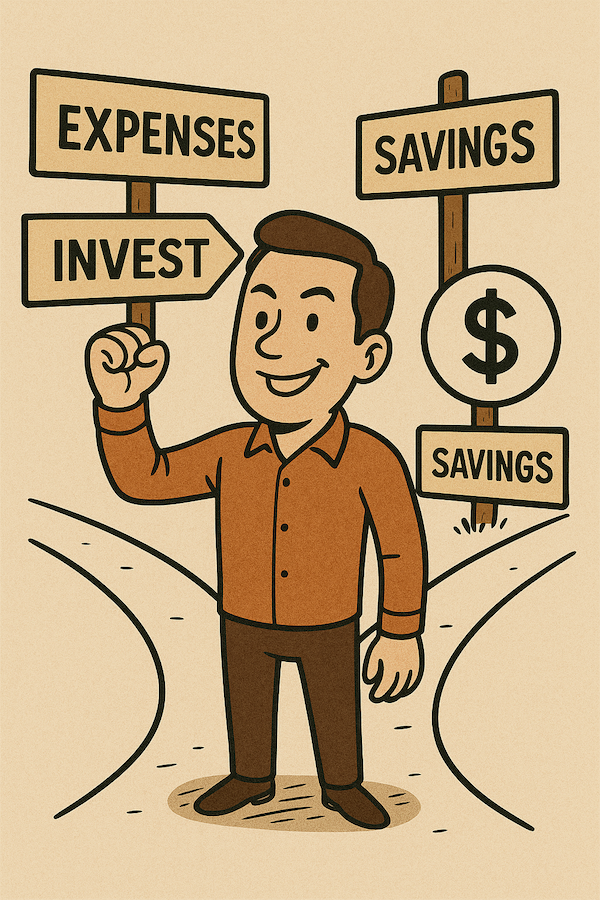
So what goes where, and why? Account types
So more than a few of us grew up thinking - I’m good if I’m putting some amount into my savings account, usually at the same bank as our checking account, at times feeling bad when we saw savings as ‘a bit lower’ than what might be sitting in checking. Well, the reality, at least in the US, is that sometimes your banks savings account really doesn’t offer much in the way of interest, and for some of us, it becomes far too easy to just transfer cash out of it to accommodate a night out or whatever.
Let’s start simple
We’ve all got a checking account, or should. Maybe that’s all you’ve got, or maybe you have multiple.
What about your retirement account, and savings? Another investment account? The ‘most obvious’ way isn’t always the best.
When I had first moved to my current state, I was quite happy to be eligible to join a local credit union due to my employer. My prior bank was actually charging me to hold my money, something which I think and hope is long gone, but going from some nonsense monthly fees to zero fees was an immediate obvious improvement. However - setting up a savings account and even a money market account (can give close to CD levels of interest) took me years to pay attention enough to realize they simply weren’t giving me ‘real’ amounts of interest at all. The money market account’s interest was tied to using their debit card for purchases, which is in general an awful idea, IMO, as it is a direct link to your bank account with minimal protection (compared to for example, a good credit card like Discover that you pay off every month). So as I wasn’t using their debit card at all, I was effectively getting a fraction of a percent of interest - on both savings and money market accounts.
But let’s rewind for a moment. Note the account types are in general priority order from top to bottom.
What are the core account types?
Checking
Even if most of us rarely carry cash nowadays (Apple Watch/contactless + auto-pay for a win ;) ), let alone write checks, you’re probably going to need to link some bills to an account for basic necessity expenses. There are different options available even here, but we’ll come back to those. Checking really is intended to serve one purpose - where your recurring bills are paid from each and every month.
If you did a budget or the 15/10/75 breakdown from the General Investing page, you should know what your overall necessities and ‘luxury’ expenses work out to on a monthly basis. If you haven’t, it’s probably worth doing it now and then coming back here.
The point? In a majority of cases, your checking account is the worst place to hold onto ‘extra’ money, so we want to limit what goes in there and stays month to month, while allowing some flexibility as expenses may ebb and flow higher and lower to some extent on a monthly basis.
Your checking account is almost always the worst place to hold onto ‘extra money.'
Retirement Funds
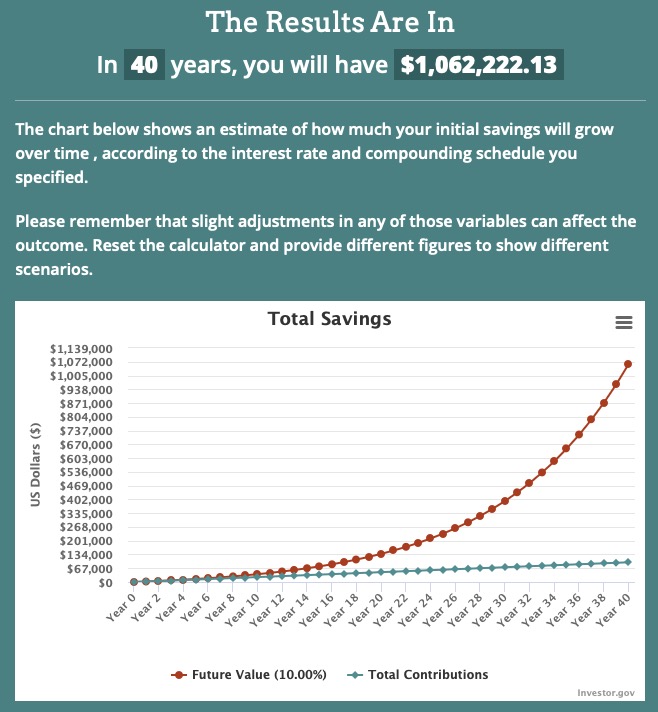
401k, 403b, Roth 401k, SIMPLE 401K - if you have one of these offered from your employer, make sure you are at least maxxing out any matching contributions from your employer, but ideally getting this up to a direct deposit of the maximum contribution allowed yearly by the government. The maximum contributions are around $23000 a year, with some additional allowances if you’re 50 or higher. The nice part here is that if you have a single employer and your monthly contributions would put you over the yearly limit, the plan will automatically stop contributions once you reach maximum, and you’ll see the additional funds in your paycheck once the limit is reached.
A typical employer match is to match your contributions at either 50% or 100% up to a yearly maximum, ranging from 3-6% in most cases, with 5% being a fairly common match maximum. If we take the low side of this as they match 50% of each of your contributions, with a 5% total match maximum, and you make $100,000 a year, this means they will contribute a maximum of $5000 a year. If they do a 50% match on your contributions, this means you would need to contribute $10,000 a year to get the full match, or if they match 100% contributions, you could max out their match by contributing only $5000 a year. Divide that by however many paychecks you get in a year to determine how much minimum you need to contribute to your employer matching funds (again, this is effectively free money - please do it!). Of course, your real goal is to get to at least 15%, or possibly more if you’re over 50 and are allowed additional yearly ‘catchup’ contributions, but your minimum should ensure you get any/all matching funds from your employer.
But I don’t have an employer-sponsored 401K or equivalent!
Yeah, some of us don’t, or haven’t at different times, and that’s OK; you still have options!
You can open your own personal IRA (Investment Retirement Account). Just like with a 401K, your contributions are ‘pre-tax,’ which means on each paycheck, as well as at tax time, contributed funds do not count towards your taxable income - so not only are you saving for ‘future you’’s retirement, you’re also reducing your yearly taxes, and possibly increasing year-end tax refunds!
The maximum contribution in 2025 for IRAs is $7000, or $8000 if you are 50 or over. Note that if you are just starting one and did not contribute to the prior year, you are allowed to make a contribution for the prior year as well. IRAs, like 401Ks, generally have early withdrawal penalties if taking money out prior to age 59 1/2, but also have a few exceptions:
-
You may withdraw up to $10,000 for first-time home purchases
You can withdraw for qualified education expenses
You can withdraw to pay for health insurance premiums if/when unemployed
You can withdraw up to $5000 penalty-free per child at birth or adoption
There are a few other qualified withdrawal conditions, but it’s always wise to confirm for a specific year, as the terms and laws may change over time.
There is also an IRA type called a Roth IRA. The yearly limits are the same for each type, and if you have multiple accounts, the yearly limit is applied to all of your IRA accounts combined, meaning regardless of which accounts or combination you contribute to, your total contributions to all of them may not exceed the yearly limit. A Roth IRA does not let you deduct contributions from yearly taxable income for the contributions themselves, but is not taxed when you withdraw in retirement, versus a Traditional IRA or 401K (and similar accounts like 403b) is tax deductible on contribution, but taxable on withdrawal.
In general, a Roth IRA is suitable for younger investors, those in a lower tax bracket or just starting their careers, or if someone expects to be in a higher tax bracket at retirement.
There are a lot of words above and different conditions, but if you’re just starting out, pick one and roll with it. As you become more informed and grow your investment, you can always open another IRA of the ‘other type.’
You can open a personal IRA with Fidelity or an institution of your choice. Personally, I’ve had accounts with several institutions and I’m pretty happy overall with Fidelity, while Vanguard is another decent option. There are a few caveats between the two of them. Fidelity has a CMA (Cash Management Account) offering, as does Vanguard, but many others don’t. You may or may not initially care about this, but as you start to get your finances and budget under control, a CMA could be used in place of a checking account, while both allowing for additional investing or simply automatically giving you money market rates for money sitting in the account (currently around 4% versus often < 1% for normal checking accounts). So personally, I’d pick between the two of those.
Setting up direct deposit for an IRA
This one is slightly more complicated compared to a company-sponsored 401K or non-IRA account, in that an auto-deposit to an IRA may not be capped and stopped once you hit your maximum for the year, and there are some penalties for over-contributing which are best avoided. But most employer payrolls allow for not only percentage-based direct deposits but numeric ones, meaning you can specify an exact amount. So for an example with simplified math (the math is correct, but the salary may or may not match yours), if you make $100,000 a year, and have an IRA contribution annual maximum of $8,000, and are paid twice a month, set your IRA contribution to 8000 / <number of paychecks a year> or 8000 / 24 for the example, or $333.33 per paycheck. IMPORTANT: You need to work out your own math and confirm max contributions before setting this up. Some good news is yearly maximum contributions either stay the same or sometimes increase.
But I don’t have direct deposit at all!
Ok, we can still work that one out as well. Your bank still most likely offers a ‘bill payment’ option, or a way to schedule automatic payments which are initiated/pushed out from your bank. There are other ways, for example to have Fidelity or Vanguard auto-pull the money from your main account monthly, but just don’t do it - it’s a slower process and you’d rather have your funds distributed quickly. Set up recurring bills or auto-payments for the respective amount, ideally with each paycheck or at worst, as monthly payments. This might be another possibility to consider if a CMA type account might work out for you, as Fidelity and others will allow you to use their app to scan checks from your phone and then auto-deposit to your account, which can then set up an automatic recurring distribution to your IRA account. It may sound complicated, but it’s really not.
If this is sounding too complicated, don’t worry; just take the simplest oath to make sure your contributions are automated and hands-off
Savings
I know, I know - it’s ‘easy’ to just leave your paycheck going to your existing bank account like it’s always been.
I also know that, especially as the penalties for moving money out of traditional savings accounts (might still be in place some places, like penalties of withdrawing more than 3x a month or quarter), it’s just too easy to move it out, and - in most cases, you’re not really making much interest off of it. I think the difference in my credit union saving and checking accounts is something silly like 1/10th of a percent. Meanwhile, High Yield Savings Accounts (HYSAs) can still net 4-5% interest, which isn’t bad for money ‘just sitting there.’

As we want to automate things into a hands-off approach, ideally through direct deposit, it’s worth considering your options for savings via a separate account.
-
High Yield Savings Accounts - your existing bank may offer one, or you can use a different bank.
-
Check on withdrawal penalties or limits. Some banks like SoFi require also opening a checking account with them, so if some specific saving goal is reached (e.g. down payment on a vehicle or house), you can transfer to checking to then write a check or withdraw via ATM.
-
Check interest rates. This is a bit of a balancing act, which depends on if you have some shorter-term savings goal that you expect to later withdraw from, or if you’re mostly looking to benefit off of interest and time. There can be a wide gap in interest rates across different institutions! Some may offer ATM and debit cards, or even checks vs their savings account, and others may require an ETF/electronic fund transfer back to your normal bank.
-
Ensure your funds are FDIC insured, which is effectively free government insurance on up to $250,000 of deposits
-
-
Money Market Accounts
-
Your existing bank may offer these, but again - check the interest rates and conditions!
-
They typically come close to, or may even match CD or HYSA interest rates but are a bit more liquid, meaning you can write checks or transfer funds out of them without any penalties. Accounts like Fidelity’s CMA accounts automatically pull any cash in the account into their money market funds without any action required from you.
-
-
CDs/Certificate of deposits
-
Most likely offered by your bank, but check the rates! Also offered by institutions like Fidelity (but not SoFi as far as I'm aware), these are effectively ‘contracts’ for a given duration (3/6/12 months or longer) offering a specific percent interest.
-
Less liquid than cash or money market funds, as they do incur a penalty (varies - assume at least ~10%) if you withdraw funds before the contract/CD term is reached.
-
Has options to ‘auto-rollover’ meaning at the end of the term, it can be set to roll the funds into another CD at the current rate for truly hands-off renewal. You may need to check a setting for what to do at CD maturity, but in general it’s do it once and ‘done.'
-
Remember, one of the savings goals is getting to having 3/6/12 months worth of your monthly necessary expenses, followed by any other specific savings goals like down payments on a car or house, or vacation savings. SoFi has a nice interface to allow for different savings goals (example - car, vacation) which will show your progress in terms of each, but doesn’t offer CDs, and may be a bit more ‘fiddly’ on making withdrawals.
If your immediate goal is to establish your emergency fund, you could start with an HYSA or CMA account to set up direct deposit to. When you eventually get to 12 months of expenses saved or more, you can consider whether or not CD rates are high enough to consider a CD ladder, with staggered renewal dates; that is, one CD maturing each month. When you don’t need the money, just let them auto-renew, and if problem times hit, know you’ll have money becoming available monthly, just set the CD to not auto-renew and you’ll have the funds available in your account with the accrued interest. If that sounds too complicated, and my own credit union indeed makes it difficult to set up the entire ladder automatically, you can always opt to leave it in a CMA or HYSA account instead.
Ok, all good, but I’m not hitting my investment and savings percentages yet!!
That’s happened or will happen to nearly all of us at some point or another, especially when just starting out. Do the best you can here, and focus on getting your employer retirement fund match and getting high interest credit card bills paid down to zero, and then start putting aside money for savings, or increasing retirement savings. If you have direct deposit, you should be able to adjust your allocations multiple times if need be, so even if you’re ‘only’ contributing a few percent to retirement and even 1% to savings while tackling bill reduction, you’ll be all set to increase the amounts as you’re able to.
I have more money left over once my necessities and expenses are paid
This can happen as a result of hard work like getting those pesky credit cards paid off, a work promotion or raise, or you may be lucky enough to simply live below your means, or a combination of all of them. You should really assess your percentages once a year as well as if/when you get a promotion or raise.
If you know you have a planned significant upcoming expense within the next year or so or a new specific savings goal, maybe add the additional percentage to your savings path or expand 3 months of ‘emergency funds’ to 6 or 12 months. Make sure your retirement contributions are maxxed out for annual contributions. Make sure you’re not falling back into poor habits and carrying high interest credit card debt and are paying them off in full monthly and enjoy the reward points (as long as they’re paid in full monthly!). You can look at any remaining debt with 6% interest or higher (car payments, student loans?) and make a plan to get those paid off earlier.
If you’ve done all of those and still have extra money coming in, consider opening a taxable investment account, usually called a brokerage account at an institution like Fidelity, or an HSA (Healthcare Spending Account) if you qualify for one.
HSAs (Healthcare Spending Accounts)
Ok, so you’ve got your retirement investment and savings sorted and at reasonable levels. Now you can consider if you have a need or use for an HSA, or if you have regular ongoing health expenses, you might even consider this part of your Savings plan.
HSAs have a pretty unique advantage, and thankfully don’t have the downside to FSAs(Flexible Spending Accounts). While FSAs are ‘use it or lose it’ and you lose any remaining funds at year-end, HSAs exist in perpetuity. Even better, some of them may be invested to see the money grow, from traditional index funds, money market funds, or in some cases, even individual stocks (but hold that thought for a moment until we cover ‘typical’ investing in the next article).
But wait - there’s even more! HSAs are pre-tax/tax deductible contributions, reducing your taxable income, and also aren’t taxed at withdrawal as long as the money is used for healthcare expenses. So as far as taxes go, they’re even better than 401Ks, Traditional or Roth IRAs!
Unfortunately, there are some qualifications and limits
For single coverage, you are only eligible for HSA contributions if your deductible is >= $1650 annually, or >= $3300 for family plans with a maximum annual conitrbution of $4400 for individual plans and $8750 for family coverage. There is more detailed information available on Fidelity and it will be more likely be up to date for the given year.
Personally, I’m just outside of being eliglble for coverage with my current employer’s plan deductible, but even at a relatively large employer previously, I would have been… so it’s worth considering. Even if healthy but qualified, this is another way to grow your money over time as it doesn’t expire and may be invested, so could even be saved for retirement medical expenses if you qualify for it.
Brokerage Accounts
Ok, so you’ve made it to 15% investment and 10% or more savings. Congratulations, seriously - you’re probably better off than a good number of people you know! Once those ‘basics’ are addressed, especially if you’re maxxed out on retirement investment and are good on savings, and have paid down your high interest debts, you might want to open a brokerage account for additional recurring investment, or worst case, one time investment until you can do it recurring in the future. Of course, if you’re in the small group who is completely set for all of life’s expenses, including retirement and healthcare, well.- you probably already have a brokerage account or are just reading this page for grins, but for the rest of us -
there are some key differences between your investment account(s) and a brokerage account
Investment accounts are taxable in some form or another - IRA and 401Ks on withdrawals and Roth IRAs are contributed to after the money has already been taxed. However, there are some key things that can happen in any type of investment account:
-
Dividend payments - some stocks and many investment ‘funds’ and bonds (don’t worry; we’ll cover these in the next article in some depth, just think of as ‘investments’ for now) can issue periodic dividends back to shareholders. If you’ve only held an investment for under a year, this would typically be taxable for the year. This is why you may get a Form 1099-DIV or 1099-INT from your bank each year, as technically that money is added to your income as taxable income for the year.
-
Capital or short-term gains - Mutual Funds or ETFs are effectively ‘collections of stocks, and or bonds and other investment instruments,’ some of which are actively managed and change often, and others are tied to specific indexes like the S&P500. These funds may adjust their overall holdings rarely, once a year, or much more frequently in order to better track a specific index by percentage of each holding, or as a result of the fund manager’s research. When this happens, they are selling shares of some of their holdings in order to then purchase different holdings. In some cases they may be making money off of the individual holdings being sold, and give a disbursement of cash to their shareholders. These disbursements may or may not be taxable, and if they are, are either short-term gains which get taxed at your normal tax rate, or if held for over a year, are taxed at a (generally) lower capital gains tax rate.
In retirement investment accounts, you are ‘shielded’ from this activity - you may be able to see when it has happened in some detail, but none of this is taxable to you in the year it occurred. This is one of the reasons retirement accounts are also sometimes referred to as ’tax-advantaged’ accounts.
In brokerage accounts, however, there are no direct tax benefits, in that those distributions, dividends, and fund sales (by your or by some fund’s holdings) will generate some amount of additional yearly taxable income. There are ways to minimize this, and we’ll discuss it further, but this is one of the reasons you generally do not want to hold mutual funds in your brokerage account, while they are perfectly fine in your retirement accounts. ETFS (Exchange Traded Funds) are close cousins to mutual funds, but have some tax advantages built into their structure to reduce additional tax burden and are better candidates for your brokerage account investments.
What can I invest in in a brokerage account?
Well, almost anything, really. Stocks, bonds, mutual funds, ETFs, Money Market Funds, and even alternative investments like crypto and Real Estate Investment Trusts(REITs). So, pretty much the same things as you can invest in in a retirement account, and possibly a few more. Not all are ideal for a brokerage account, but we’ll cover that shortly.
529 College Saving Plans
529 Plans are a unique tax-advantaged way to save for education, which may be your own, your spouse’s, or your child(ren). Contributions generally are taxed at the Federal level, but some states allow the contributions to be tax deductible for state income tax purposes.
The growth and withdrawals regardless are not taxed for qualified expenses, which can be used for tuition and fees, room and board, and there’s even a computer/equipment allowance as well as the option to use up to a specified amount for K-12 and you can change the beneficiary at any time., so that for example, if you were savings towards an advanced degree then decided to put it on hold but your spouse was going to start school, or if one child decided to not go to university while another one did, you can change the beneficiary to retain the tax-free withdrawals.
As each state has its own specific guidelines for maximum donations and tax deductibility, it’s best to take a look at the latest up to date information for your state, but do note you usually don’t need to do a state-sponsored plan to get the benefits, and the power of compounding is your friend here, especially if you start one at the birth of a child - even with moderate investments, you’ve got 18 years to grow it.
RSUs, ESPPs, Stock Options and other accounts
Depending on your career and prior or current employers, you may actually have some other accounts floating around out there. Personally, I’ve consolidated nearly all of mine, as at one point I realized I had a handful of old stocks and cash doing nothing in one old account, while I had a few shares of other prior company stock, and again, cash sitting there gaining no interest.
If you do have stocks, whether they were RSUs or purchased, or Employee Stock Purchase Plan holdings (which would now be stock, unless you sold them off), these may be transferred to a brokerage account of your choice for either for a minimal fee or no fee at all, along with any cash that may be sitting in those accounts. You can also decide that one of them may be where you want to do the majority of your non-retirement-account investing, and making it your primary brokerage account. That would be fine, but don’t assume it’s the ‘best’ just because it’s associated with an employer.
If you have stock options or RSUs (Restricted Stock Units, sometimes given by a company as part of your compensation package or as a bonus), you generally can’t transfer options at all or any unvested RSUs, but can transfer vested RSUs as they are now effectively ‘normal’ stock holdings.
It’s up to you if you want to consolidate to a single primary account or not - there are benefits from having a ’single pane of glass’ of all of your holdings for things like retirement or investment analysis and just general visibility. Note that you may also be able to ‘link’ other accounts to your brokerage account so it can ’see’ the holdings elsewhere but not necessarilly have direct access to them. YMMV - I’ve consolidated down from 6-7 accounts down to 2, with the only thing in the other account being a somewhat ‘unique’ holding that won’t transfer directly and has specific sale timelines and conditions. Once it’s eventually sold, I’ll transfer the resultant funds out into my primary account.
One last thing
Hopefully at this point, you’ve got at least your basic accounts set up, with at least some level of recurring deposits even if still working on improving the percentages, but what do you invest that cash in for retirement, brokerage, 529s, and HSAs? Do NOT assume that all accounts will ‘auto-invest’ for you - some will, some won’t, some may require you to choose and set up an initial allocation, but we’ll walk through the options, and we’ll go through that in some detail in the next article.